Winter at a self-serve bay: what fails first when it hits 20 below
When it drops below zero in Fargo, the failures in a self-serve bay tend to show up in almost the same order every year.
September 23, 2026 · 4 min read
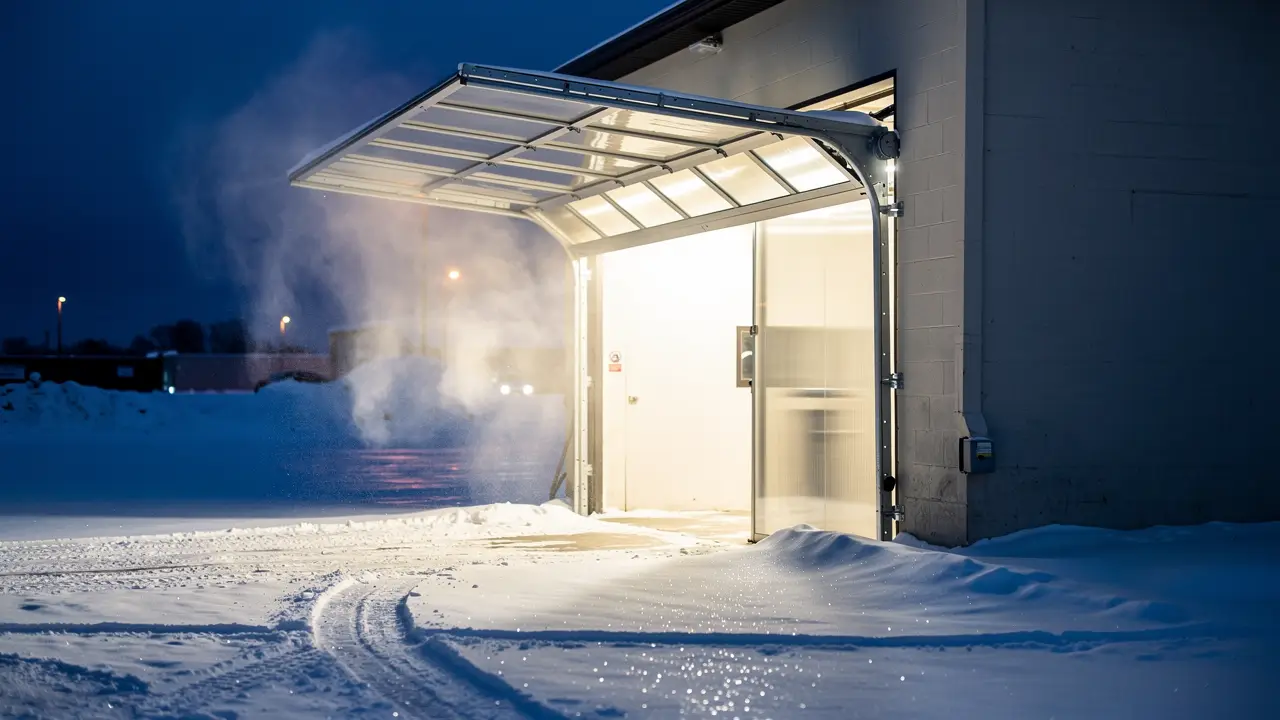
Fargo winters do not ease you in. One week the bay is still running fine at fifty degrees, and the next the wind chill is twenty below and something in the equipment room has already quit for the day. If you run a self-serve wash anywhere in North Dakota, Minnesota or South Dakota, this is a familiar pattern. The failures are not random. They tend to show up in close to the same order every year, and most of them give some warning before they happen, if you know where to look for it.
The bay door is usually first
Doors take the worst of a hard freeze because they sit right where wet and cold meet every time a vehicle pulls out. Water sheets off the car, runs down the track, and pools at the base of the door frame. Overnight that puddle turns to ice and welds the door to the slab underneath it. A customer pushes the button, the opener strains against ice it cannot break, and now the whole bay is out of service until someone chips the door free by hand.
Door hardware built for a wash bay handles this differently than a standard commercial door would. A threshold designed to stop water from pooling at the base of the door in the first place, rather than trapping it there overnight, removes that freeze point before it ever forms. It sounds like a small piece of hardware to worry about, but it is often the difference between a door that opens on the coldest morning of the year and one that does not.
Air openers earn their keep in weather like this
Not every door opener on the market is built for a wash bay. A lot of commercial openers are made for garages and warehouses, dry environments where ice and chemical spray never enter the picture. Air-powered openers are a different animal. They are built specifically for the wet, corrosive conditions a wash bay produces day after day, and that difference matters a great deal more in January than it does in July, when there is almost no margin left for a weak component.
If the openers on your bay are older, or came with the building rather than being chosen for the job, it is worth having someone who knows the difference walk the equipment before the first real freeze, not after a door has already jammed shut on a Saturday morning with customers waiting in line.
Lines and weep systems don't forgive being ignored
Underneath the parts you can see, the water lines are doing quiet work to avoid freezing solid. A weep or bleed system, meant to keep water moving through a line in cold weather, only helps if it is actually cycling the way it should. A stuck valve or a clogged line defeats the whole purpose of having it there, and there is usually no warning until a section of pipe splits from ice expansion, somewhere inconvenient and almost never somewhere you can see from the equipment room.
This is exactly the kind of failure that gets caught on a walkthrough before it turns into a repair bill. Once a line has already split, there is no preventive fix left, only a shutdown while someone finds the break, drains the affected run, and replaces the damaged section before the bay can reopen.
Heated floors take the load off everything else
A heated bay floor is not only a comfort feature for a customer standing there with a wand. It keeps meltwater moving instead of sheeting across the slab and refreezing, which takes pressure off the doors, the drains, and anyone walking through the bay in boots. Floor heat needs its own seasonal check, the same as anything else that only earns its keep three or four months of the year and gets forgotten the rest of the time.
- Every bay door checked for ice buildup at the base of the track
- Weep or bleed valves confirmed to be cycling, not just present
- Door opener chains and cables checked for stiffness in the cold
- Floor heat zones checked for cold spots or uneven melt
- Exterior spigots and hose bibs disconnected and drained
Why a monthly walkthrough catches this before you do
This is the real argument for having someone in the bay on a set schedule, not only when something has already broken. DMI's own salespeople visit their regular customers monthly, and they are the only provider in this market that offers that as a standing service. It is not a sales line, it is a habit that catches a weeping valve or a worn threshold seal in October, before it becomes a frozen door and a line of cars in January.
If you are in Fargo or anywhere else in the Tri-State and want a second set of eyes on your doors and openers before the temperature drops for good, DMI's door hardware and door opener lines are built for exactly this kind of weather. Call the office at (701) 237-6606 and get on the schedule while there is still time to do something about it.
DMI Car & Truck Wash Systems, (701) 237-6606
Call (701) 237-6606More articles
Touch-free, soft-touch or both: choosing an in-bay automatic
Touch-free, soft-touch and combination in-bay automatics each trade something for something else, and the right choice depends on your vehicles and your climate.
What a monthly check on your wash pumps actually catches
A plunger pump rarely fails all at once, and a monthly check is built to catch it somewhere in the middle of that slide.