What a monthly check on your wash pumps actually catches
A plunger pump rarely fails all at once, and a monthly check is built to catch it somewhere in the middle of that slide.
September 23, 2026 · 4 min read
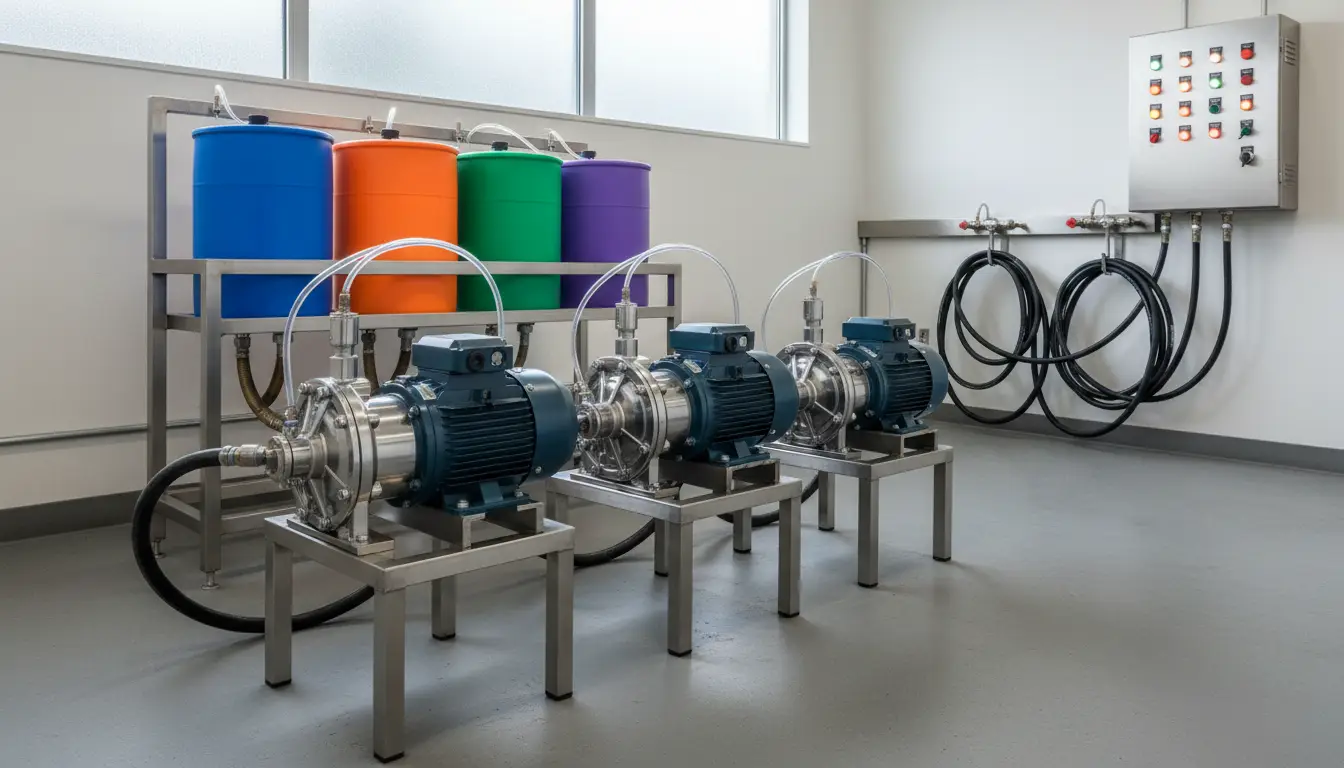
A wash pump does not fail all at once, usually. It loses a little pressure, then a little more, and most operators do not notice until a customer mentions the wash feels weaker than it used to, or until output drops enough to show up in a chemical bill that does not match the wash count. A monthly check exists to catch the pump somewhere in the middle of that slide, while a seal replacement is still a cheap fix rather than a full rebuild.
Why plunger pumps wear the way they do
Plunger pumps do the same mechanical work thousands of times a day: a plunger drives through a seal, forcing water through a valve under pressure, over and over, cycle after cycle. Cat Pumps has built a reputation on the dependability of that basic design across a huge range of applications worldwide, but dependable does not mean maintenance free. Every seal and every valve is a wear part, and wear parts wear on a schedule whether anyone is watching or not.
Seals go first, then valves
Seals are usually the first thing to show wear, since they are in constant contact with a moving plunger and whatever is in the water, including any grit that made it past the intake filter. A worn seal lets water leak past the plunger instead of building pressure ahead of it, and that shows up as a slow pressure drop long before the pump actually fails outright.
Valves wear next, and a worn valve tends to show up as inconsistent pressure rather than a steady drop, since it is not sealing evenly on every stroke. Left alone, a bad valve puts extra strain on the rest of the pump, which is how a fifteen minute seal job turns into a much bigger repair a few months later.
Pressure and flow are two different problems
Pressure and flow are not the same symptom, even though they get lumped together. A pressure problem is usually the pump itself, a seal or valve not holding under load. A flow problem is more often somewhere upstream, an intake screen clogged with debris, a filter overdue for changing, or a line partially restricted. Chasing a flow problem with pump parts wastes time and money, so it is worth knowing which one you are actually looking at before ordering anything.
The easiest way to tell them apart, short of instrumentation, is to watch how the symptom behaves. A pressure drop tends to be gradual and consistent across every wash. A flow problem is more likely to show up as sputtering, inconsistent water use, or a wash that improves briefly after backwashing a filter.
What a worn pump actually feels like at the wand
An operator does not need a gauge to notice the early signs. A wash that used to strip road grime in one pass and now needs two, a wand that feels softer than it should at full pressure, or a chemical mix that is not rinsing the way it used to are all symptoms of the same underlying issue. By the time a customer complains about it directly, the pump has usually been losing ground for weeks.
Belts and oil: the maintenance that's easy to skip
Belt drive pumps depend on correct belt tension to transfer power evenly, and a belt that has stretched or glazed over robs pressure just as surely as a worn seal does, just quietly, without any obvious symptom until it slips outright. Oil changes matter just as much and get skipped just as often, because a pump that still runs does not look like it needs anything.
None of this is complicated work. It is the kind of maintenance that takes fifteen minutes done on schedule and half a day of downtime done after something has already failed.
Why the brand of the replacement part matters
When a seal or valve does need replacing, using the part built for that specific pump matters more than it might seem. A generic substitute can look identical and still wear at a different rate, or fit just loosely enough to shorten the life of the part next to it. DMI keeps most parts in its Fargo warehouse, and products and parts can go out for next-day delivery, which matters when a bay is down and every hour it stays down is lost revenue.
- A steady or sudden drop in wash pressure
- Chemical that no longer rinses clean the first time
- Visible drips or weeping around the pump head
- Belt squeal or slip on start-up
- Oil that looks milky or has not been changed on schedule
DMI is known in this market for its pump service, and a big part of that is simply showing up before a pump becomes an emergency. Most of what a Cat Pumps system needs is already on the shelf in Fargo, and after twenty years of doing this across the Tri-State, the staff can usually tell within a few minutes of listening to a pump what is actually wrong with it. If your equipment room has not had a real look in a while, call (701) 237-6606 and ask about the parts and service side of the business.
DMI Car & Truck Wash Systems, (701) 237-6606
Call (701) 237-6606More articles
Winter at a self-serve bay: what fails first when it hits 20 below
When it drops below zero in Fargo, the failures in a self-serve bay tend to show up in almost the same order every year.
Touch-free, soft-touch or both: choosing an in-bay automatic
Touch-free, soft-touch and combination in-bay automatics each trade something for something else, and the right choice depends on your vehicles and your climate.