Touch-free, soft-touch or both: choosing an in-bay automatic
Touch-free, soft-touch and combination in-bay automatics each trade something for something else, and the right choice depends on your vehicles and your climate.
September 23, 2026 · 3 min read
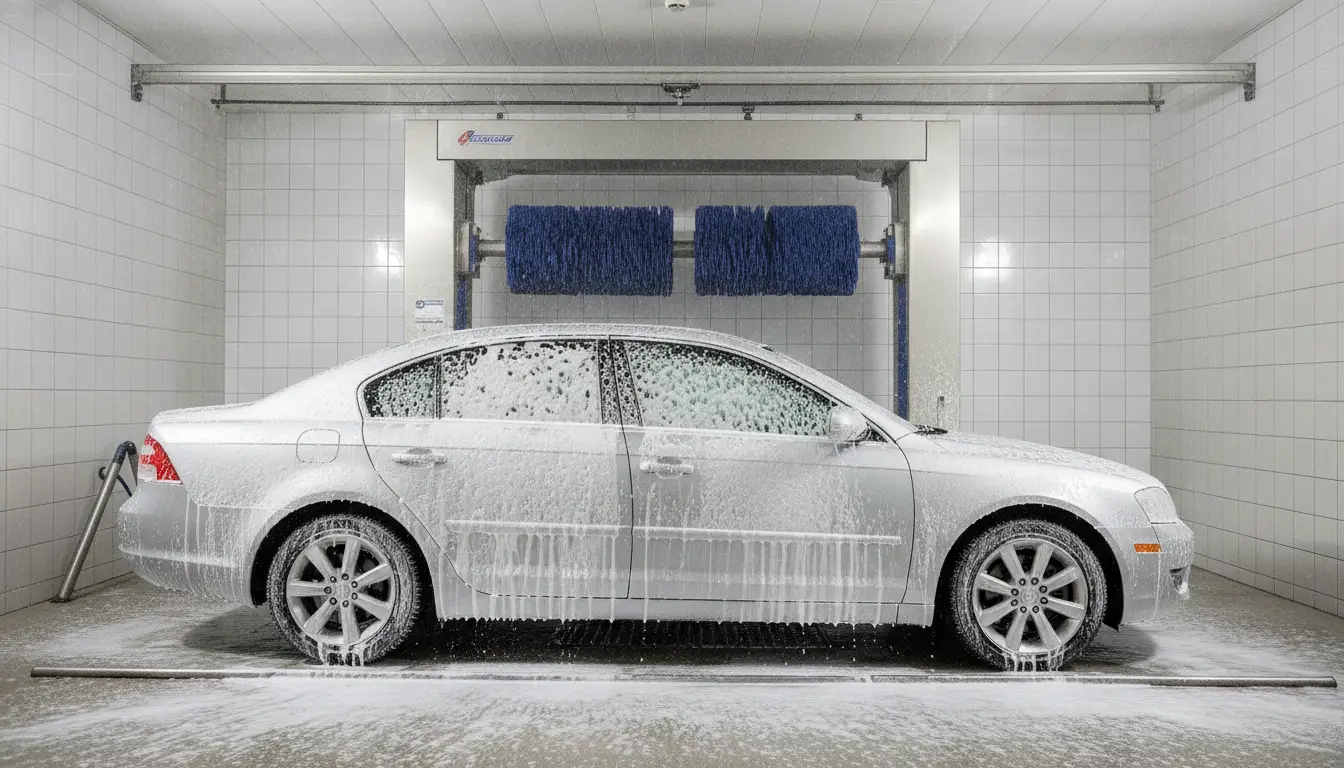
Every operator adding or replacing an in-bay automatic runs into the same question eventually: touch-free, soft-touch, or something that does both. There is no single right answer here, and anyone who tells you there is has usually only run one type of system. What actually matters is which trade-offs you are willing to live with, given your vehicle mix, your climate, and how much time you or your staff have for maintenance between visits.
What touch-free actually buys you
A touch-free system cleans with water pressure and chemical rather than a brush making contact with the vehicle. Belanger's Kondor line is built around exactly that idea, no friction, and the manufacturer's own case for it is longevity and low maintenance costs. There are no brushes to replace, no cloth to rotate out, and less to service on the wash arm itself.
The trade-off is that touch-free relies more heavily on chemical dwell time and pressure to break up road film and heavier dirt. On a vehicle that only sees light dust, that is rarely a problem. On trucks and fleet vehicles that pick up real grime, an operator sometimes finds a straight touch-free wash needs a second pass to get the same result a brush would get in one.
Where soft-touch still wins
Soft-touch systems use foam brushes or cloth in direct contact with the vehicle, and for stubborn dirt, bugs, and road salt residue, that contact does work that pressure alone sometimes cannot. The trade-off runs the other way here: brushes wear, they need replacing on a schedule, and a poorly maintained brush can leave the exact swirl marks and complaints that make an owner switch systems in the first place.
The equipment itself matters as much as the wash type. A soft-touch system built with premium components and easy access to the wear parts costs less to keep running over its life than one where every brush change is a half day job.
The middle option: running both off one system
Autec's EV-1 Evolution takes a different approach and gives an operator both options inside one machine. It pairs 48 high pressure oscillating nozzles with the AES-415 soft touch system, adds eight turbo nozzles aimed at tires, wheels and rocker panels, and dispenses a heated foam presoak ahead of the wash itself. The system offers up to seven wash packages, so a customer can choose friction, high pressure, or a combination of both depending on what they are willing to pay for.
For an operator, that flexibility means one piece of equipment can serve a customer base with very different expectations, from someone who wants the gentlest possible wash to someone who just wants the dirt gone fast, without running two separate machines to cover both.
Floor rail versus overhead rail in a Tri-State winter
One detail that gets overlooked until the first bad winter is how the wash arm actually moves through the bay. A floor rail system runs along a track at ground level, exactly where salt, sand, and ice accumulate over a North Dakota or Minnesota winter. Belanger's FreeStyler avoids that problem by design, running on an overhead gantry instead. The manufacturer's own point about the overhead rail design is that it eliminates the dirt and ice related failures tied to floor rail systems.
That is not a small thing here. A wash arm that has to fight through packed ice and grit on its own track every cold morning is going to need more attention than one running clean overhead, and the difference shows up most in exactly the months when you can least afford a bay sitting idle.
What actually decides it for most operators
In practice, the choice usually comes down to your vehicle mix and how much hands-on maintenance you and your staff can realistically keep up with. A retail wash serving mostly passenger cars in decent condition can run touch-free with very little fuss. A wash that sees a lot of trucks, farm equipment, or winter grime tends to lean toward soft-touch or a combination system, because contact still does work pressure alone cannot. Climate plays a role too, since a bay that runs through a full North Dakota winter puts more stress on any moving part exposed to grit and cold than one that only sees a mild season.
If you want to look at the FreeStyler, the EV-1 Evolution, or the Kondor side by side before deciding, DMI's in-bay automatic lines cover all three, and the office in Fargo can walk through which one fits your bay and your customers. Call (701) 237-6606 to talk it through.
DMI Car & Truck Wash Systems, (701) 237-6606
Call (701) 237-6606More articles
Winter at a self-serve bay: what fails first when it hits 20 below
When it drops below zero in Fargo, the failures in a self-serve bay tend to show up in almost the same order every year.
What a monthly check on your wash pumps actually catches
A plunger pump rarely fails all at once, and a monthly check is built to catch it somewhere in the middle of that slide.