Spot-free rinse and hard water: why the last 30 seconds decide how the car looks
The final rinse is the one step a customer actually judges the whole wash by, and hard water wins that argument every time if it isn't treated.
September 23, 2026 · 4 min read
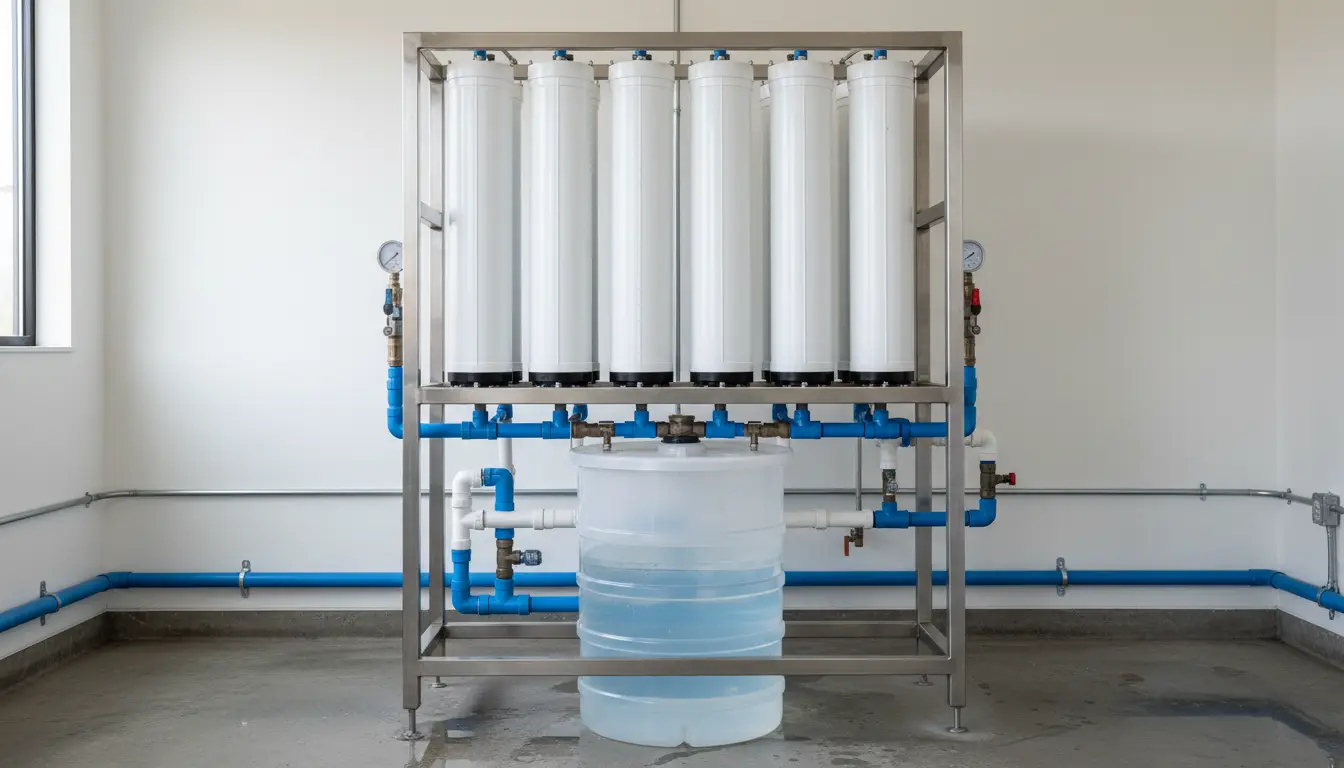
Every step of a wash can go right, brushes clean, chemical mixed correctly, pressure where it should be, and the car can still come out spotted, because the very last thing that touches it is the rinse water. If that water is hard, it wins the argument every time, no matter how well everything before it went. Operators tend to put their attention into brushes, chemical mix, and pressure, all of which matter, but the final rinse is the step a customer actually judges the whole wash by, since it is what they see reflected in their own hood on the way out. Getting that last step right is worth more attention than it usually gets.
What hard water leaves behind
Hard water carries dissolved minerals that do not just disappear when the water evaporates off a panel. They stay behind as the fine white spotting that shows up on a dark hood or a clean windshield within minutes of a wash, the exact result that undoes everything the wash itself did right. It is not dirt coming back, it is the water itself leaving a residue as it dries.
How hard the water is varies a lot by location, and even within the same town it can vary between a well source and a municipal supply. It is not something an operator can fix by adjusting chemical concentration or dialing up pressure. The minerals themselves have to be addressed at the water, before it ever reaches the vehicle, which is the whole reason a spot-free system exists as a separate piece of equipment rather than an additive.
How reverse osmosis actually solves it
A reverse osmosis system forces water through a membrane fine enough to strip out most of the dissolved minerals responsible for spotting, producing water that dries clean instead of leaving a residue behind as it evaporates. That treated water gets held in its own tank and used specifically for the final rinse stage, where it actually matters, rather than trying to treat every gallon that runs through the entire wash cycle from presoak to final pass.
This is also why a spot-free rinse is usually its own dedicated step at the end of a cycle rather than blended in earlier. Water quality only matters on the surface that is left to dry, so treating the last rinse is where the investment actually pays off.
Why the rinse and the dryer have to work together
Spot-free water solves the mineral problem, but it does not solve everything on its own. A dryer still has to move enough air, in the right pattern across the vehicle, to get that water off before it has time to sit and evaporate in place. Even properly treated spot-free water can leave a faint film if it is left to air dry slowly on a still day instead of being blown off the surface while it is still moving, which is part of why dryer placement and airflow matter as much as the water treatment itself.
That is the case for treating rinse and drying as one system rather than two separate line items. A strong dryer paired with an untreated rinse still spots. A great spot-free rinse paired with a weak dryer still leaves streaking on horizontal surfaces. Neither one alone finishes the job the customer is actually paying for.
Membranes wear too
An RO membrane does not last forever, and its performance degrades gradually rather than failing outright all at once, which makes the decline easy to miss from week to week. An operator who has not had the system checked in a while may not notice the spot-free rinse slowly getting less effective, month over month, until customers start commenting on spotting that genuinely was not there a season earlier.
Feed water quality, usage volume, and how well the system has been maintained all affect how long a membrane holds up, which is part of why this is a system worth having someone familiar with it look at on a schedule rather than only when a customer complains.
- Spotting on dark paint that was not there a few months ago
- A rinse that used to run clear taking on any tint or cloudiness
- Customers mentioning streaking on hoods or windshields
- A membrane system that has not been serviced in over a year
What this means day to day in your bay
None of this requires guessing at numbers you cannot verify from the equipment room. What it requires is treating the rinse stage as seriously as the wash stage, checking the RO system on a regular basis, and pairing it with a dryer that is actually doing its job. Get those two things right together and the last thirty seconds of the cycle stop undoing the first five minutes of work.
DMI supplies spot-free reverse osmosis and water reclaim systems to operators across the Tri-State, and its preventative maintenance visits check water levels and hardness, so the office can help you judge whether your current setup is still doing what it was installed to do. Call the Fargo office at (701) 237-6606 if the spotting complaints have been creeping up over the last few months.
DMI Car & Truck Wash Systems, (701) 237-6606
Call (701) 237-6606More articles
Winter at a self-serve bay: what fails first when it hits 20 below
When it drops below zero in Fargo, the failures in a self-serve bay tend to show up in almost the same order every year.
Touch-free, soft-touch or both: choosing an in-bay automatic
Touch-free, soft-touch and combination in-bay automatics each trade something for something else, and the right choice depends on your vehicles and your climate.